Friday, August 15, 2008

Mackay relatives in the USA

Dear Ruth MacDougall,
In surfing the internet I came upon "A MacDougall in Mackay Country" and just wanted to tell you how much I enjoyed reading all about the Island.
My father was born on the island and lived there with his brothers and sisters in the late 1890's and early 1900's. His father was a John Mackay, he was a John Mackay and I am John K. H. Mackay. My mother was a teacher on the island and also in Armadale. My mother was a Mackay before she married my father in San Francisco, California. My father was a merchant marine engineer that sailed through out the world and his ship came to San Francisco and that's when they decided to stay in the United States around 1926.
The picture in the blog is Katie Ann MacQueen, who is my cousin. We visited with many of the relatives last year when we were in the north of Scotland. My aunt Nan Drury who is 97 lives in Edinburgh and she was one of my mother's students when she was teaching on the island. I have a copy of the book "When I Was Young", authored by Timothy Neat. My grandfather is pictured on pages 72,76, and my cousin, Mina Mackay Stevens is pictured on page 62 and then her story on pages 63 - 89.
We love traveling to Scotland and probably have been there ten times over the last thirty years. One of the highlights was going to the island and actually visiting the area that my parents always talked about with wonderful memories and many challenges of living on Island Roan. I am interested in any and all the information I can gather about Island Roan, and would enjoy hearing about yourexperiences associated with the island. Thank you for your sharing your experiences.
Sincerely,
John K. H. Mackay

Thursday, January 11, 2007


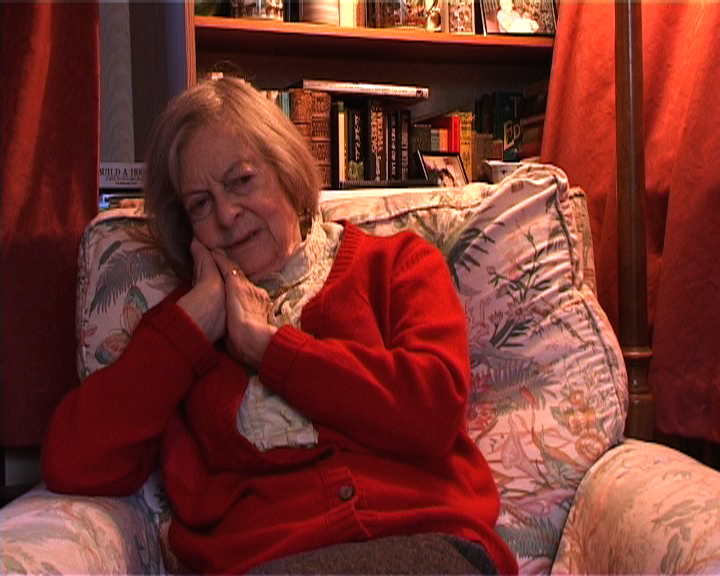
Kitty Ann MacQueen pictured above at her home in Norfolk, is one of the last remaining inhabitants of Eilean Nan Ron. In November 2006, she and her family invited me to their home, to document her fascinating memories of life on the island. The two volume DVD set of her stories can be found in the MacKay Country Archives.


photo taken by Mike Roper

Thursday, November 09, 2006

The Myth Of Island Roan

The following text was written for me by a member of the local community after I asked for those involved to offer a personal perspective on the project.

The Myth of Eilean Nan Ron


When we speak of myths we tend to think of the prehistoric or the fictional, the Trojan Horse, the Labours of Hercules, the Lord of the Rings. We instinctively distance ourselves, living in our everyday modern world, from myths and the process of myth making, as if the stories that we tell about the world around us were somehow different, somehow objective truth.

But every community has its myths, and every member of every community is complicit in the production, and reproduction of these myths. You could say that a community is defined by its myths, that a community is nothing more or less than the collection of people who believe a common set of stories, who reverence a certain mythology.

And we are all, for better or worse, members of various overlapping communities, geographical, cultural, political, spiritual, each with its own mythology, its stories, its truths. Because we are not speaking of myths as fictions, but as narratives and fragments of narratives, threads to be spun together to illustrate the past and sustain the present – we are the stories that we believe.

Eilean Nan Ron has such mythic status in Skerray. The island is a constant presence offshore, the one and a half miles of water a physical separation representing almost 70 years, a lifetime, since evacuation. The life of the islanders belongs now to stories rather than memories, and in that transformation has become a rich mythology, which defines the community that tells and retells those stories.

So what does it mean to make art out of this? Firstly, there has to be the recognition that the island itself has become a community artwork, a narrative in progress that grows, evolves, is embellished and edited.

Second, it could be seen as a corrective, a regrounding – see, this rowing, it wasn’t the work of giants or super humans, just a hard but routine part of the daily existence. And why did we all assume that the lamps would have been visible 70 years ago? Has our bright, shiny, electric world colonised our ancestors’ lives too?

And thirdly, and maybe most of all, this art will become a contribution to the work in progress that is the myth of Eilean Nan Ron, another thread to weave in the story of the island, the lassie who rowed to the island, the community that came together to help and watch, and be participants not just in an artwork, but in a myth.

J

Passing Place Exhibition

Saturday the 14th of October was a beautiful day, much like the day I rowed across to Eilean Nan Ron. Over 70 people from the surrounding communities attended the exhibition and took away with them two posters documenting the project in text and image. It was a perfect end to what was a great experience for me. Everyone that I hoped would come along to the exhibition , came, they left their thoughts and comments in a book which is now all the more important considering the mean spirited and inaccurate manner in which ceratain non participants chose to regard the project( see Am Brattach October and Novemebr issues)I did not respond publicly to the comments published, rather the engagement of the local community was again punctuated by two independent, and wholly supportive letters written by members of local the community. I am very grateful to Rhona and Bazil for taking the time and effort to show their support.

I chose not to show the film in a dark space, rather allowing some of the beautiful, Scottish ambient light to illuminate the space. The video documentation was projected whilst the oars, life jacket and lamps sat in the space.

A second projection displayed a power point of still images taken by myself and members of the Skerray community during my three month residency.
A monitor sitting ontop of the stage played the animations produced by children from local primary schools, whilst a separate monitor showed the video,Liberty Tower, which is also currently showing in Beirut.

The Skenes
Hugh and Jean
Tiegan - Altnaharra Primary School
Bazil
Joe and Babe

Monday, October 09, 2006

Liberty Tower

During my time as artist inresidence here in Sutherland, many things have happened. It seems a very long time ago that I was waking every day and returning every night to hear of the steady destruction of a country that was my home for a time. Although I did not create a work that overtly connected my residenncy here in the Highlands and my pre occupation with the events in Lebanon, I continued to address the conflict in my own way. Evacuation, passage by sea and distance are themes that connect the works, and both will be shown on the 14th. This video work, named Liberty Tower will also be shown in the exhibition Nafas, which will open in Beirut on Thursday aswell as being part of the blog work, Lebanon These Days.
go to: www.lebanonthesedays.blogspot.com


Liberty Tower, a magnificent twelve story building, where all offices boast spectacular views of the city below.
Ideally located in Hamra, the main city center of Beirut, the Centre is within easy reach of the capital's principal hotels, stores, restaurants, banks and government offices. It is easily accessible with parking facilities within the building and all around it too.

Espace SD and xanadu* are happy to invite you to the opening of

Nafas Beirut
A platform for artists bearing witness

The opening will take place at Espace SD Thursday the 12th of October 2006 at 6pm

Nafas Beirut is a platform for artists, poets, writers and filmmakers to share their work produced during or in reaction to the Israeli siege of Lebanon of Summer 2006. Believing it crucial to highlight these works, Nafas Beirut documents the emotions and experiences, and brings artists and viewers together, historicizing the moment. Nafas Beirut is a platform for these immediate responses through a multimedia exhibition and a month long series of events including, video screenings curated by various organizations and collectives, concerts, an open mike poetry jam, and a lecture on the oil spill.

The exhibition will continue until the 17th of November.
For the schedule of the events, please check http://www.espacesd.com or http://www.xanaduart.com/nafas.html
Espace SD is open everyday except sundays between 3pm and 8pm.

Regina Maris

REGINA MARIS

Tho' King Canute cannot command
the waves that lave Strathnaver's sand
young Ruth MacDougall has at hand
a motley crew, a humbly band.
Fear HER!


Only joking! I follow with interest your salty progress. All the best. Donny.

A few words from Donny Graham, friend, poet and former collaborator.

Sunday, October 01, 2006

exhibition

Thursday, September 28, 2006

16.09.06

I arrived down at the pier very early on the Saturday morning, a beautiful sunny day, a light wind and calm seas, everything I’d hoped for.

The only other person at the pier was Jean McLain, we sat upon the harbour wall and looked over at the island, enjoying the morning sun and marvelling at my luck. Jean also has a boat and makes regular trips out, both with passengers and to fish. Next arrived Billy, he had been out fishing the night before and was down early to wash all the fish scales off the decks. Then Meg arrived with her camera, to document the whole event right from the beginning. Shortly after, Billy Campbell and his wife Margaret arrived, carrying six gleaming lamps for me to light on the island, the bronze and gold bases of the paraffin lamps were beautiful in the sun light and provided the first photographic subject of the day.

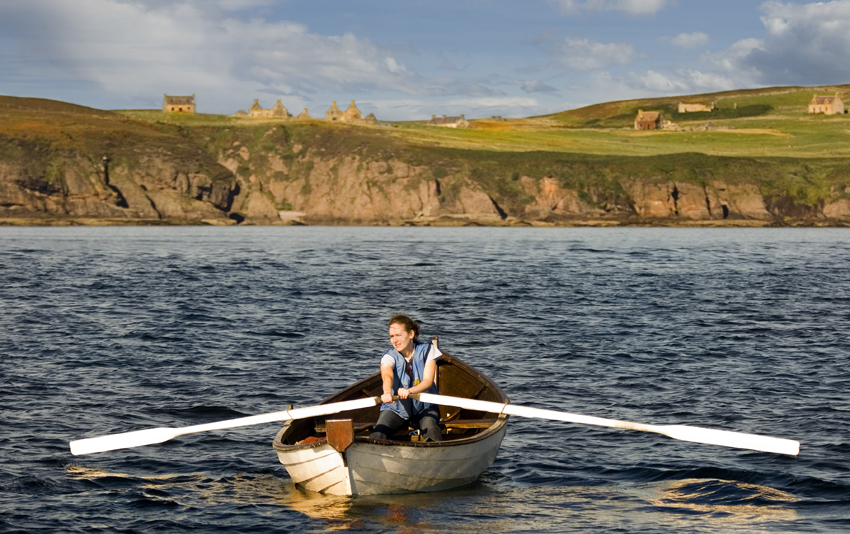
I wasn’t nervous about the row, just happy that the weather was good and after making sure all the cameras were assigned and loaded, it was simply a matter of waiting until 10.30 am. The fine weather together with the level of community engagement in the project, encouraged a large crowd of local people to form on the pier to see me off. It was quite a spectacle and no one I have spoken to, can remember ever seeing so many people in that place. Looking back at the photos and the video, I am surprised that a lot more was going on around me than I was aware of, as I was sitting down in the boat readying positions and focusing cameras.

My departure from the harbour was not as smooth as I had hoped for. On one side of the boat was the harbour wall, whilst on the other was Sinclair’s boat and so getting any kind of leverage with the oars was tricky. Finally Brian came down and took one end of the oar and acted as leverage for me to push away with. After the first two fluid strokes with the oars, a cheer went up from the crowd and I rowed smoothly out the harbour and round the pier. As I began to straighten out the boat for the channel between the rocks, I could hear the sound of a violin, at first I thought it was coming from the radio on board Billie’s boat but realised that it coming from the pier and looking up I could see amongst the waving arms, and hear above the shouts of goodbye, Karen Stevens on her violin. I was quite moved that she had come to see me off and it was the perfect touch to what was a very happy, sunny event.

Billy Macintosh followed at quite a distance behind the boat, followed then by Sinclair with some passengers and two or three other boats. I think that out of anyone I had the best view from my seat: Dave directly in front of me, the small flotilla of boats in the middle distance and the tiny figures of the viewers sanding on top of the pier with Skerray behind.

I can’t say I really remember that much from the row, I know I went at it full tilt and surprised everyone including myself with the speed I went through the water but rowing like that over a prolonged period of time, it’s easy to slip into a trance like state. When I felt the boat going of course, I would automatically re-adjust. By about three quarters of the way there, looking behind myself to keep in line, I did wonder if I would ever arrive.

I am very proud of my parking it has to be said… I don’t think even Dave could have done much better, just the right speed and angle. However, once stationary (or as stationary as you can be at sea), I wasn’t really sure what to do, Dave couldn’t help because he had the camera and the other two boats were keeping well out of it. The boat hook was fairly ineffectual and I was beginning to panic. Then, like an angel descending from Heaven, Jean McLain came down the steep treacherous stairs that lead from the port up to the island. Jean had landed on the island earlier, unseen by anyone, and I’m so glad she did. She took our rope and at last I felt we had really arrived.

On Sinclair’s boat were Meg, Bazil, Norman and Morag. Whilst unloading the safety boat of all my equipment, several of the group stepped on the island for a look around. For Norman and Billy Campbell (who has lived in Skerray for many years) this was their first visit to the island.

Getting all the lamps and tent up onto the island was almost as much work as rowing the boat but my jubilation at arriving postponed any pain I was to feel. Alone at last on the island, I chose a flat patch of grass behind one of the central houses and pitched the tent lent to me by the Macintosh family. I had been given the left over sandwiches from the previous night’s concert and sat for a while in the glorious sun. I couldn’t believe my luck, Island Roan, alone in that weather. I spent the rest of the day taking pictures, making some short videos and choosing the best places to put the lamps. It was only later when I began filling the lamps with paraffin, that it became clear that they were not all up to the job. I had six lamps with me, one of the storm lamps lost its wick during transit and the other was clearly a cheap modern version and its wick too fell down into the paraffin, leaving me with only four lamps. For a while I panicked and desperately tried to retrieve the wick but the sun had started to go down and I had to accept that I would to try with four. Mike Roper (the local photographer who kindly agreed to help me document) and I had already discussed it before the event and decided that if I could get at the very least one well-lit window, then with a little help from Photoshop, we could get a good image.

As the sun went down, the wind on the island whipped up. At seven o’clock Mike and I made first contact, he was on top of one of the many outlook points near Skerray along with a gang of local people: Meg Telfer, Dave Illingworth, Bill Telfer, Brian and Irene McLeod. Between mobile phone calls from the mainland, trying to locate my position on the island, I tried desperately to light the lamps against the wind. I managed to get one Tilley Lamp going and one storm lamp, I put both in the down stairs window of the house on the far left as you look at the island. The group on the mainland could see neither me, nor the lamps. I was wearing a white jumper and trying to wave my arms, which was difficult, as once up in the air, they tended to lock, one small side effect of a 40-minute row. Despite telephoto lenses and more than one pair of binoculars, they couldn’t find me. I continued trying with the other lamps, but one began to leek paraffin and the task of lighting the meths tongs was becoming ever more dangerous as the wind got even stronger. The first Tilley lamps couldn’t take the wind and very soon went out, on the verge of tears and exhausted from my efforts, I had to call it a day.

Though the evening was beautiful, I knew there would be many disappointed viewers on the mainland. Feeling deeply disappointed and frustrated, I took to my tent. The stars all came out and naturally, the wind dropped…

It took me a long time to go to sleep, not so much because it was scary to be alone on the island but because I was desperately trying to think of how I could have done it differently. In hindsight, it was a big task for one person, I knew how to light the lamps and the night before, Billy Campbell had them all cleaned up and glowing, so we knew they should have worked, perhaps it was just fate, in the same way that the weather was almost freakily perfect for the row, like someone was looking after me, the lamps suffered the opposite fate. Perhaps the lights of Island Roan are not supposed to be seen again.

Yet, when we consider that Mike and the others could not see the Tilley lamp that was lit, even with lenses and binoculars, can we be sure that the lights were actually ever seen on the island, there is no record of it, it’s something we assume because electrical light is so bright and can carry so far.

I had been teased by many about the pirate who allegedly lives on the island. However, I was more alarmed by my mobile suddenly going off at intervals during the night, called by concerned locals, who were checking to see if I was ok. I still find it strange that I get reception there but not in Skerray.

I got up with the sun the next morning, exhausted and the Macintosh family came to collect me at around 9am.

Mikes picture of me rowing towards the island, made the front cover of the Northern Times, fame!

Feeling a bit guilty that I hadn’t managed to complete my project, I was greatly heartened by the response I received from local people the next day in Skerray who had really enjoyed the rowing event and were only disappointed for me that the lamps hadn’t worked. Sinclair even challenged me to row his boat, which is enormous compared to the one I was rowing, but happily will give me another chance to get behind the oars.

I am now compiling the enormous amount of documentation I have and deciding how I will present it all in the community hall on the 14th of October.

Wednesday, September 20, 2006

Island Row, Saturday the 16th of September


Brian's boat